

Click play to listen to a deep dive podcast – like overview of this story. This summary is AI generated, and some elements may be not be accurate.–>
At least once a week at work, a client will tell me, “I just wish they would listen to me.” Whether it be a partner, boss, friend, parent, or even a medical professional, this desire seems to be universally human.
I have come to learn in many areas of my life, that the value of validation greatly outweighs the potential solutions we think we can offer. Turns out, we are often not that good at giving (or getting) advice. Although it can come from a place of care, it often lands as being unheard or misunderstood.

Throughout my life, I have had a variety of examples of feeling unheard. As I continue to grow in my understanding of people, and my own need to be listened to, I recognize the weight these memories carry.
When I was in college, a close friend and I went out in old town, Fort Collins. After a night of shenanigans, we were walking back to my house, which was about a mile and a half walk. Often, the walk was just as eventful as the night out.
One time, I remember carrying a cat with me for most of the walk. I don’t know whose cat it was and luckily for me, and the cat, they didn’t want to stay with us very long, and I assume got back to their rightful owner. Another time, my roommate found a child’s bike and tried to ride it to our house, before finding out that the brakes were broken and the tires were misaligned. This, too, was returned the next morning.
This night, however, involved a different kind of shenanigans, and a line I will never forget. “Your words are saying no, but your body is saying yes.“
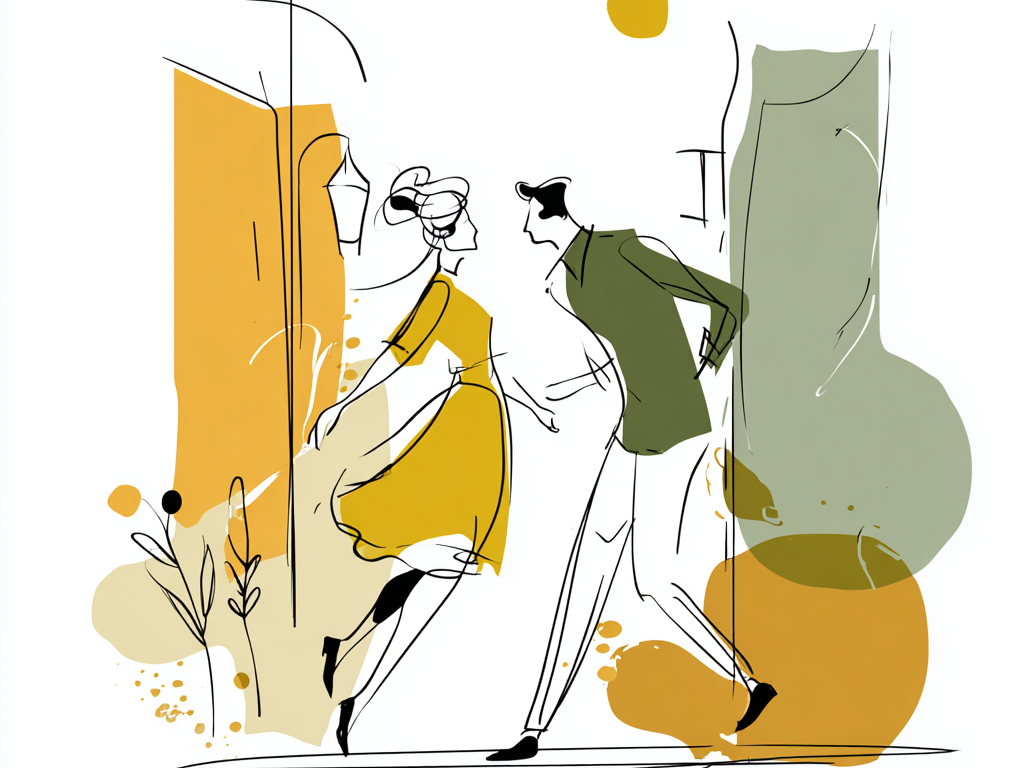
Usually, our walks back to my house involved many people, but this time I was just me and him. At first I didn’t notice, but as the walk dragged on I realized he was trying to put his arms around me, or hold my hand. I didn’t want to be rude to him, or hurt his feelings, so I ignored it at first. Then, as the street lights seemed unbearably bright, he even tried to kiss me.
I pushed him away, and probably made some kind of joke about how I wasn’t going to kiss him. He was a close friend after all, and we had been drinking. Maybe he didn’t know what he was doing, and I didn’t want to hurt his feelings.
Then he said it, “your words are saying no, but your body is saying yes“ this sticks out to me. I was so upset that he would say something like that to me. It felt like his own feelings, desires, or interests were more important than what I was explicitly telling him. I even tried to spare his feelings!
I am sure this is not the first time I had felt unheard, or that my reality was minimized, but it is a moment that still stands out to me. It was very vulnerable feeling, standing in the street, unsure what to do. I didn’t want to fight with him, he was my friend.
The weight of that moment wasn’t just the boundary being crossed, but the realization that my clear, spoken reality was open for interpretation. I also realized the dialectic that can exist when even our closest friends struggle with accepting our words.
Later, when I was working at Coors, there was an incident with another male friend that echoed a similar feeling of invalidation and minimizing my verbal expression, although the context was much different.
After work one evening, we had been talking about his relationship with his girlfriend, and he asked if I wanted to come to his house for dinner. That wasn’t particularly out of the ordinary, we spent a lot of time together, and again, were very close. What was out of the ordinary, however, was the way he was driving. Although the drive to his house from work was only about 20 minutes, I noticed his driving change dramatically throughout the trip.

As I was following him in my car I watched as he started swerving severely, even on to the shoulder or towards oncoming traffic. I noticed my heart start to race, and I felt completely helpless. It was extremely confusing to me, and I began to worry about him. When we left work he seemed okay.
We had been talking about emotional things, but I was not concerned about him. Even the beginning of the drive, things didn’t seem to be off. Luckily, for both of us, he didn’t crash into anything, he was safe, and we got to his house safely.
When we got inside, I could tell by the way that he was talking that he was clearly intoxicated. Intoxicated with what, I’m still not totally sure. But, it didn’t really matter. Somewhere between where we left from and his house, we went from being his “normal” self, to swerving on the road and putting lives in danger.
I was really upset with him, and at the time I really wanted him to know his behavior was completely unacceptable. Now that I’m older, I realize that maybe this conversation was better suited for a different time, but in the moment I didn’t feel like it could wait. So I told him, and in a way that was a lot more direct than I usually am, especially with my friends.
I told him that driving behind him like that is not something I would ever do again, and that I didn’t know if I could trust him anymore. The worry that he caused me about his safety, my safety, and the safety of the other people around us. I told him how unfair it was to me that he would do something like that.
Truthfully, in that moment, and even now, I was really worried about him. I’m not necessarily sure that I showed that in my angry words, but it definitely was true. However, I was again surprised by his response.
I expected he would make excuses, potentially apologize or tell me he didn’t know what I was talking about. Surprisingly he didn’t say any of those things. Instead, the words he said, were “why do you have to look so pretty.”
Unsurprisingly, this really just pissed me off more. He had a girlfriend, we’ve been friends for many years, and this was absolutely not the point of my conversation with him at all. Which, like I said, being older, and being a counselor now, I recognized that my timing was pretty poor. That’s not to say, that I should just accept that type of response to my very direct, and important words.
Maybe this was meant as a compliment, but I think it’s more likely that he was trying to deflect the conversation. He didn’t want to talk about what I brought up, and instead of telling me what was going on, or even saying he didn’t want to talk about it, he tried flattery as a distraction. I ended up just leaving his house, and told him to get some rest.
It didn’t feel like I would be able to have a productive conversation, or even be heard in that moment. So, I left. Angry, and completely invalidated. We never talked about it again, but as I promised, I also never followed him in my car again either.
The feeling of being unheard, invalidated, or that our words are not as important as someone else’s agenda are not particularly unique. They are not even limited to personal relationships.
I’m reminded of something that one of my colleagues shared during a didactic discussing pregnancy, and therapy that he had done with pregnant women when he was working for the VA. I enjoyed his whole presentation, and there were many relatable points he shared. One that really stood out to me was his clients sharing they felt like their questions were not answered or respected, and they often were told that there wasn’t enough time to address the issues that they were experiencing.
Although my personal context in the healthcare system is different, this theme very much resonated with me. The feeling of being dismissed, or feeling less important in some way in healthcare, is something I have experienced for most of my life.
I’m starting to realize maybe I’ve been a giraffe all along. In some of my other posts, I have discussed feeling that the medical system is trained to look for horses, because they are the most common reason for hoofbeats. On occasion, they may find a zebra, or the less common reason for symptoms. I have often felt even more complicated, and my mom even said, “you’re a giraffe.”
Now that I am experiencing the extreme push – pull of chronic illness, an MS diagnosis, and now exploring treatment for POTS, this frustration has only intensified. My past neurologist routinely told me that my symptoms were “not MS,” or “this appointment is only 15 minutes.“ These comments left me with the feeling that my needs were too much.
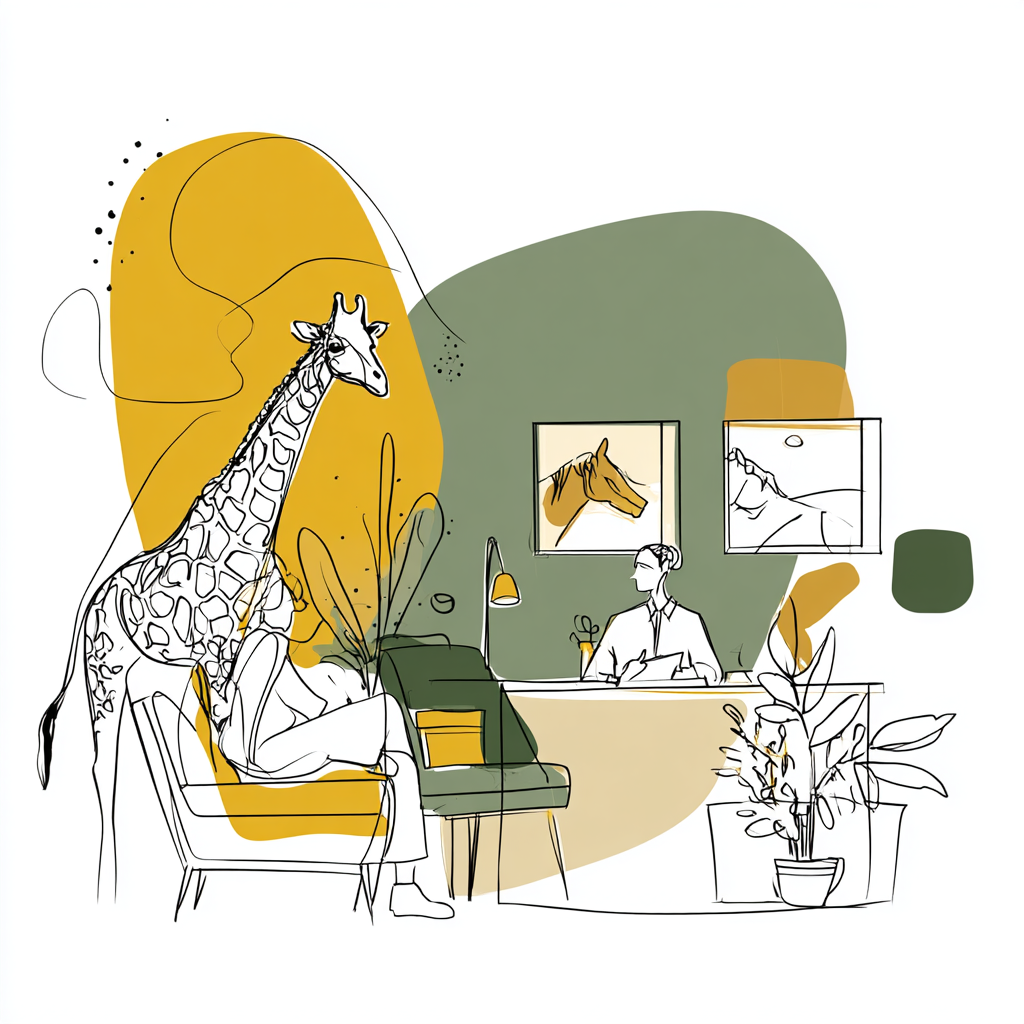
The helpless feeling when you’re sitting in front of a doctor and they implicitly (or sometimes explicitly) tell you that they aren’t going to help you, can’t help you, or just dismiss your needs as being valid at all was not new to me.
Before finding a different neurologist, I decided to just change my expectations of him. Not because I didn’t think I deserved to be listened to, but because I knew I needed his help. I knew there was not cure for this disease, and my only hope was to continue to take the disease modifying treatments. Also, I found him through the MS society, and he was listed as an expert in the field. I decided I needed him, and I would have to find a way to deal with my discomfort with his communication style.
He was not the first doctor that had reminded me of the time limit placed on him, or how my needs were too complicated or didn’t make sense. Then, I had an appointment that stood out more than any I had ever had. It was with a cardiologist, regarding the POTS symptoms I was having. My neurologist, multiple PCPs, and even others around me seemed to be stumped, or to not really understand the impact of my symptoms. She just listened to me, nodded, asked questions. She even said some of her colleagues would’ve dismissed the symptoms that I was having, but she didn’t.
She told me “This is not made up,” and “It’s not your fault.”
As she said that, I could feel the tears welling up. She didn’t have an immediate solution, but she had a plan, and it felt like I finally had a medical professional that was in my corner. This moment was huge for me.
Later that week, I shared this moment with my psychiatrist, who I call “Dr. Bro.” I was excited to share this with him, because I usually did not have good news to bring up. His response, “sounds like she paid attention in the trauma-informed care portion of her training.“ Although I don’t inherently disagree with that comment, and I think that she probably did pay attention, even just that statement felt dismissive to me.
Somehow, this moment of excitement I had shared with him was minimized into a checklist item, or a training win.
I think he meant it in a positive way about her ability to see me where I was. But it felt like my needs needed training, or were too special. Maybe that something about me was so complicated that someone would have to be trained how to listen to me. Truthfully, I don’t believe that.
I understand that my medical needs are fairly unique, and what is happening with my body is extremely complicated. I’ve shared recently, how POTS and MS actually counteract each other, and sometimes the treatment for one actually causes the other to get much worse. I understand that this is not common. Giraffe problems are usually complicated.
In that moment I was reminded of Brené Brown’s words about the difference between sympathy and empathy. The animated youtube video shows an animal in a dark hole, feeling lonely and sad. She describes sympathy is looking into the hole and saying something like “wow. That’s a lot down there. Do you want a sandwich?”
This animal cares, but that’s not empathy. That’s sympathy. They’re keeping that person at a distance and noticing the pain that they’re going through, and wanting to help, but also wanting to stay far away.
However, she then describes the animal that’s showing empathy literally climbing into the hole. And it’s just there. Technically they’re not giving them anything physical. Maybe a hug, or a hand hold, but nothing intended to solve the problem at all.
In order to have empathy for another person, we have to find the place in our heart that has been hurt like that before. That doesn’t mean we have to experience what they are experiencing, but we have to be able to connect with the feeling they’re expressing. It’s making a choice to sit with them, and ourselves, holding that negative painful emotion. It’s not easy. But it’s important.
I think Dr. Bro’s words were showing sympathy, but using the clinical termonology in the way he did, also kept him away from experiencing the emotions I was having. Instead of a sandwich, he offered non-emotional work-related terminology for my experience.
Then, he wanted me to consider the doctors’ position. You know, the ones that have not been able to validate and listen to me when I share my struggles with them. He encouraged me to try to understand why they might act in this way, or how they may be feeling in these moments.
Let me be clear, I have extreme empathy for them, and truthfully, most people. Yet, at that moment, I didn’t want him (my doctor, who I pay money to listen to me) to try to coach me about understanding why other doctors would invalidate or dismiss my needs (who I also pay to listen to me.) It actually just added to the invalidation. Of course I knew they were just trying to do their job. A very complicated, difficult, job. I completely understand that. In that moment I just wanted to be heard.
I’m just a person, trying to survive a very complicated reality. All I want from any of them is to see me, to listen to what I am saying, and tell me the truth. I understand how challenging it is to say something to the effect of “I don’t know how to help,” especially when you see it as your job to help. I truly believe that people who are in the healthcare system, often started their journey with the wish and hope to help others. There are many external forces, outside of their control, that make that mission feel impossible at times.
At the same time, if I’m expected to try to empathize and understand their limitations as a human trying to do their job, I also expect them to try to understand and empathize with my journey as a human in giraffe’s clothing.
It’s a big ask, maybe, but I don’t think it is too much to ask. Would I like for them to find a cure to the things that are happening to me, of course! But that’s not my expectation. My expectation is that they will be able to see the life I am explaining, the struggles I experience, and my daily reality. Whether they know how to fix it or not. That they will see a human in front of them that is struggling, and just validate that it sounds hard.
My desire to be validated for what I’m experiencing, to be heard, is not special or unique. It’s a human desire. I hear it often from clients, family, friends, many of whom do not have complicated medical needs.
I think this is something that we can all do better. Listen. I tell my clients this all of the time, because it’s such a common thing that we do as people.
Validation is more important than solutions.
It’s a funny disconnect. When a loved one comes to us with a problem, we often want to fix it for them. We love them, and we don’t want them to have negative emotions. Yet, when we go to a person with our problems, what we want from them is for them to validate and understand and accept, who we are and what’s happening to us.
After that validation, maybe we’ll be ready for solutions, or maybe not. But the validation ends up being key, and often more important than the potential solution.
When we’re going through these challenging times, whatever they are, I truly believe that we can benefit the most from not feeling alone. Someone being there with us. Caring about us, and telling us that what we are experiencing, although there may or may not be a solution, is real. That they see us, and they’re not going to leave us alone in a dark cold hole.
Although I have many experiences with doctors both now and throughout my life that were not able to fully sit with me in my challenging time. I have way more examples of people in my life that have been able to do that, and for them, I’m eternally grateful.
Their compassion and empathy is invaluable to me. Many of you reading this right now are those people. So when I say that I encourage all of us to try to show more empathy and not feel like we need to solve all of our friends’ problems, many of you are already doing that.
My request more than anything is for us just to remember. Whatever pain that we feel when someone shares something upsetting or sad with us, could be an opportunity to show empathy. Instead of trying to avoid feeling that way.
Although, that desire to avoid feeling negative emotions, is a human instinct. We’ve all been there. So having grace for yourself in that moment is also very important. And choosing the hard road to climb down and sit with a person in their hole, is not expected of you. But it’s greatly appreciated.
When we are able to just repeat back to a person who is expressing their pain. No special training needed. Often even saying “I’m not sure what to say,” can be better than trying to suggest a solution. For me I know that’s true.

For my giraffe gang, I would encourage you to practice being assertive and direct about your needs. I have worried a lot about how I share this in the past with others. Even in the past, with legitimate concerns, I didn’t want to be viewed as demanding or pushy.
What I now have come to learn, is advocating for yourself is not aggressive. If others around you can not respect your needs, it is likely in your best interest to find people who will. My sister said something to me the other day, and it made me cry.
I shared one of my posts with my mom, and sisters before sharing it publicly. I told them I wanted them to read it to make sure it wasn’t “too much.” All three of them gave me really helpful and wonderful feedback, and I am so thankful they were willing to help me.
The tears started when my sister sent back, “it’s not too much. You’re not too much.” Even remembering it now I can feel the surge of acceptance and love in those words.