
Click play to listen to a deep dive podcast – like overview of this story. This summary is AI generated, and some elements may be not be accurate.–>
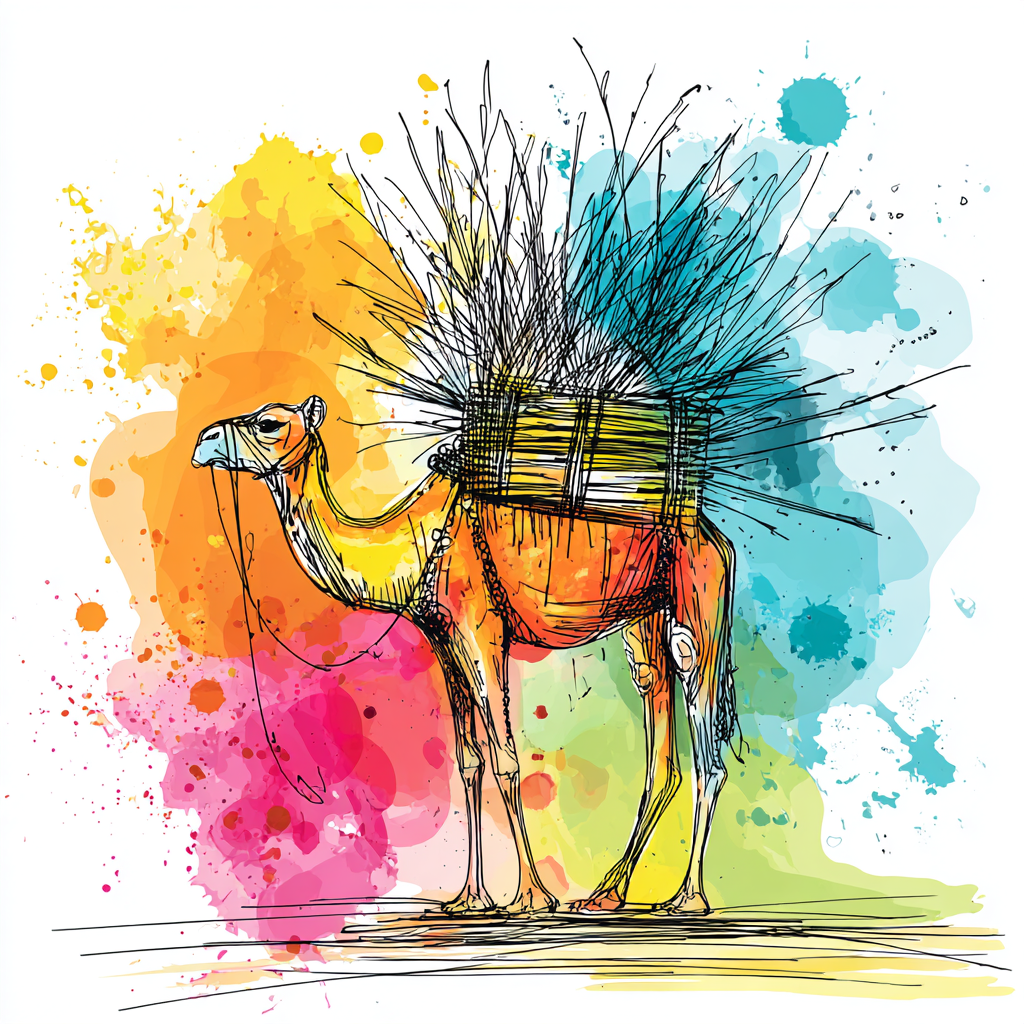
As a mental health counselor, I’ve used the concept ‘the straw that broke the camel’s back’ to explain stress and burnout. But honestly, many of my clients—especially the younger ones—stare at me blankly. I recently found an analogy that works much better, and it speaks directly to my experience with Multiple Sclerosis: Stress and overwhelm are like drinking alcohol. They have a delayed, cumulative effect, and can hit you out of nowhere.
The concept is the same, basically. Things around us that bring us stress add up, and sometimes they add up silently. Well, that is until our back is broken, or we got really drunk accidently. Maybe that is why his analogy works so much better. Getting drunk accidentally is more relatable than breaking our backs with straw.
I like it better too, because it allows for more agency. Although I don’t know much about camels, I don’t get the impression that they are asked consent to carry the straw. There is an element of this that also feels relatable, but it limits the true nature of what we are able to do about our stress.
Using the alcohol analogy opens up possibilities for change and management. We can make choices to take breaks, or “stop drinking,” even if we don’t think we need to at the time. Also, when we drink too much, there is some responsibility we need to take for the consequences. Not like the camel. The camel I just feel bad for.
Both of these analogies feel relevant for stress, and potentially even more so since my MS diagnosis. I didn’t know it at the time, but life before seems so simple when I look back. Fun was usually my priority, and planning was generally not a huge factor in my life.
Beer used to feel like it was part of my personality. Now, when I open a beer with excitement of what it used to be like, after one sip I remember everything is different now. Back then,. I talked to people all day, and felt I couldn’t get enough! Now, around 2pm I hit a mid-day slump, and feel like I need to lay with my legs up to recover.
The amount of time that has passed is far less than the impact it has had on my life.
Less than 10 years ago I worked at a brewery. I was there for about 5 years, and during that time, I got to be around conversations with some of the innovators of the field. Although I’m sure they did not see me as an equal by any means, I absorbed the knowledge they shared.
Turns out, when you are a bartender at an employee bar, you overhear a lot of interesting things. I also got to taste beers and experiments that were not released yet, or sometimes ever. It was fun.
I still remember times at a bar listening to men in their 20s explaining beer to each other, and getting it horribly wrong. Sometimes, when I felt full of courage, I would correct them or edge my way into their conversations. Usually, they were surprised. I didn’t look like a “beer expert.”
The truth is, I never was a “beer expert,” but I paid attention. I had collected enough knowledge to be dangerous.
On my first date with Jared, all we did was drink beer. We met online, and his segue to talk to me was that he knew a lot about whisky. It was fun. We shared our knowledge with each other. It was similar enough that we were interested in both, and different enough that we weren’t competing with each other.
It didn’t hurt that we both thought the other was cute.
As our relationship progressed, we went to breweries together. It was so much fun! We went all over Colorado exploring together. Our interest extended past the beer itself.
We would talk about the vibe of the place, the theme, and the art, in addition to the flavors in the beer. When we went to Denver, he showed me how to use the train effectively, and plan and navigate our trips. We talked about writing a brewery travel book. We haven’t done it, but it was a fun dream to discuss.
I don’t have that relationship with beer anymore. A part of me really wants to, honestly, but it’s just different now.
It’s almost as though it intensifies the symptoms of MS. The accumulative effect just hits harder now, and I’m just not interested. One sip can make me feel nauseous, and three can make me stumble. The rules have changed. It feels like overnight.
Then I remember what my neurologist told me shortly after my diagnosis.
It’s likely that MS has been making its mark on my body for about 5 years before my diagnosis. At that time, it just wasn’t quite big enough to warrant an ER visit.
“Everyone gets numbness in their hands sometimes.” “Maybe I drank too much.” “I think I’m just dehydrated.”
Maybe these were valid excuses for the seemingly random ailments I experienced. Or, maybe MS was brewing inside my brain and spinal cord, preparing its attack.
My relationship with beer is in the past now, a cherished memory. I grieve the loss of those care-free nights, but I am learning a new relationship with my body, one that is less about absorbing and more about protecting.
The analogy of stress having the effects of alcohol works so well because it validates the delayed and accumulative effect that both stress and alcohol can have. It is not immediate, and it adds up exponentially rather than linearly.
I have been wondering if MS is similar in a lot of ways, at least in my life. There was a delay, at least in my awareness, of the effect. The MRI shows there is damage and inflammation, but it wasn’t immediately outwardly visible.
Somehow, since July 2024, it feels like everything changed all of the sudden. Maybe this is the accumulative nature of the disease, stress, and life showing its effect.
When I think of a camel carrying straw, I have a very distinct, unfortunately stereotypical, image in my head. It’s a cartoon camel for some reason, with people standing around it, throwing straw up on it’s back. Then, after one last tiny piece of straw is thrown to the top of the pile, the camel’s back folds in half, with it’s legs spread in all four directions.
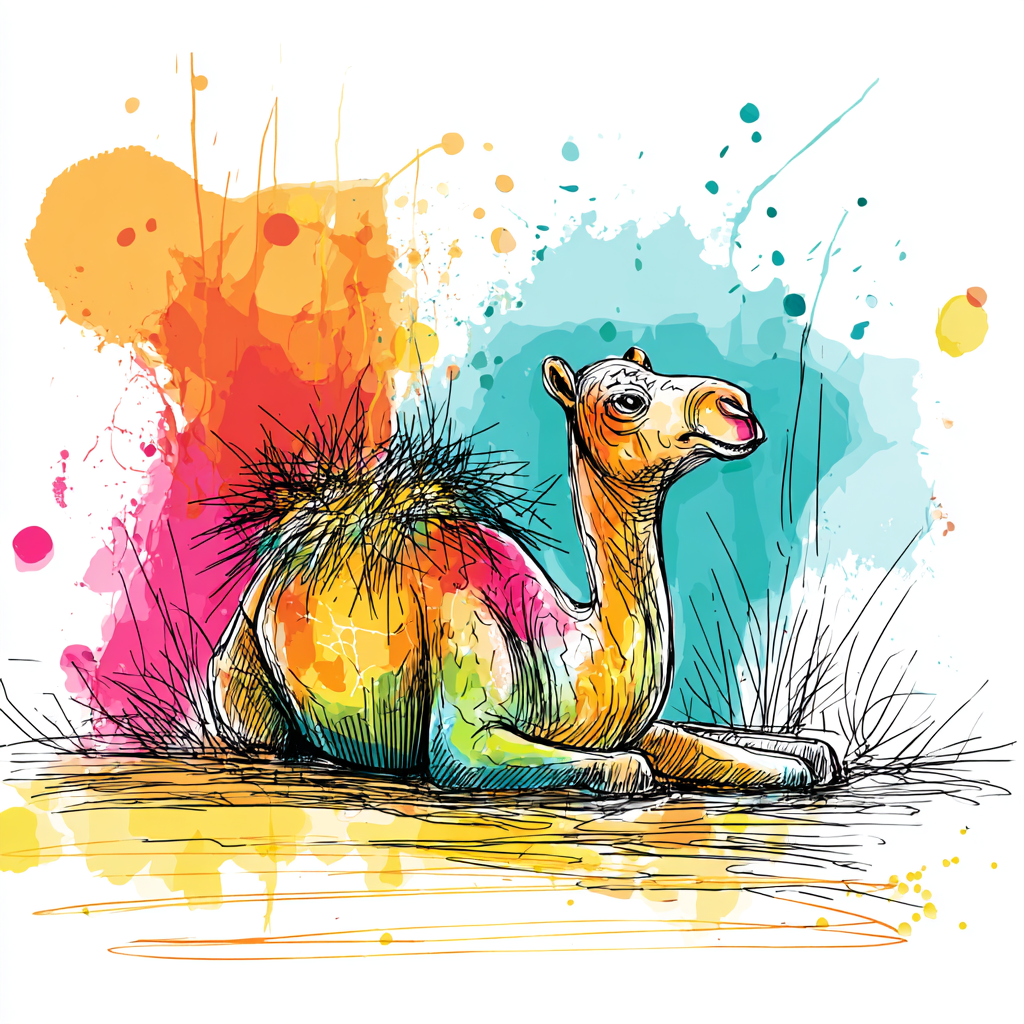
Poor camel. There is no hope for him, nothing he could do.
I don’t want to be a camel. There is a bit of this image that resonates with me. The idea that the camel did nothing wrong to deserve this outcome. I appreciate that sentiment in particular, and when people remind me of this, I do feel a little better for a moment.
I remember asking my husband, maybe a year ago. “Is there something I could have done? Is it my fault?” In true Jared fashion he told me “of course not!” hugged me and kissed my forehead.
It felt nice to not have to be blamed for the trouble this disease has caused in my life. Yet, the part of this analogy that makes me feel stuck is that the camel can’t do anything about it. The poor guy just stands there, and lets his back break. It’s still not his fault, but I don’t want to be complacent in that way.
This is an area I keep coming back to, and I think it is a result of my training, particularly with DBT. The things that happened to us are not our fault. Yet, it is our responsibility to determine what we do to manage the effects. This helps me move away from “why me?” and move towards, “what now?”
The alcohol analogy is more empowering. You can put the drink down, you can drink water, you can do something different tomorrow, you can pay attention, or talk to a professional. There are options. I like options.
With chronic illness, or being a human honestly, removing stress is impossible. This is not my goal, and I have recommended to many clients to gauge their expectations of themselves as well. Instead, it is about building our resilience and ability to manage stress as it comes to us.
The path to this first of all is not a destination that we just arrive at one day, and now we are resilient. Instead it is a continual process. It involves learning and exploring what works for us, and what does not. It is also individual and unique, just like fingerprints or snowflakes.
Connection, knowledge, creativity, and comfort are some of the elements of self-care that speak to me, and help me build distress tolerance for the harder days.
Don’t get me wrong, there are also times when I feel like I just want to be a sad camel, and just need a hug. But, most of the time, I want to learn more about what is out there. What can I do, what is happening?
I might be my doctor’s least favorite patient, because I don’t just take “it’s not MS,” as a sign to give up. “Who can I talk to? What does the research say? Are there other options?” Like an adult version of an annoying two year old.
Being curious, wanting to learn, and not being afraid to ask “dumb” questions helped me when I worked at a brewery, so why wouldn’t it help me now? Or at least I don’t anticipate it will do me any harm.
At the same time, I have learned that I can only hold so much at once. In order to have space for curiosity about my illness(es), stay on top of being a parent, paying attention to the schedule, and working full time, I need to limit my intake of other content.
This means, I am not the most informed about politics, the news, the weather, or the changes the HOA has approved. I don’t have space to stay on top of all of these things. Like Karen from Mean Girls (the old one, I’m not sure about the new one, I haven’t seen it.) “My breasts can tell when it’s already raining.” Or, I only know when the pressure washing and painting is happening on our townhouse when the painters are walking on the roof past the window, or taped our door shut.
In order to have space for curiosity about my illness(es) and to not just be a ‘sad camel,’ I need to limit my intake of other content. Sometimes this bites me, but generally, it is a sacrifice I am willing to make. The knowledge of what options I have, and the courage to pursue them, is a lot heavier than any of the beer choices I used to make.


Dis-ease means we live without our previous ease. Nothing is simple or straightforward; complications cause difficulties that must be addressed. It affects our decision making and changes our priorities. Still, we persist usually with a smile.